Is your dad new to the world of spirits and would you like to give him a bottle as a present? If so, it’s important to choose something approachable: bottles that create a fair and pleasant impression and don’t have an extremely distinctive flavour profile. But where do you start with our vast range? We’ll help you get started with 7 tips for the novice connoisseur – spirits we believe are approachable and which we reckon your dad won’t already have on his shelf.
1. Scottish Islay whisky
First up, we’ve picked out a Scottish Islay whisky. Islay is one of the most iconic Scottish whisky regions, and whiskies from this area are renowned for their peaty flavour profile. Mention Islay and peat, and Ardbeg immediately springs to mind.
The smokiness of an Islay whisky invariably divides whisky drinkers into two camps: love it or hate it. Typical flavours often found in Islay whisky include smoke, campfire, sea salt, iodine, pepper and notes of dark malt, and that unique and recognisable character has given Islay an almost legendary status within the whisky world.
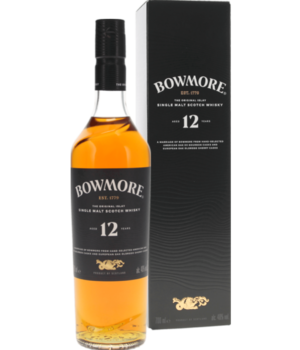
Anyone wishing to take their first steps into the world of peated whisky would do well to start gently. This Bowmore 12y is an excellent starting point, as it offers a balanced flavour profile with only a hint of peat.
This Bowmore 12y was awarded a score of 82/100 on Whisky Voor Iedereen.
2. Scottish Highland whisky
For our second region, we’ve chosen the Scottish Highlands. The Highlands are Scotland’s largest whisky-producing region. Whiskies from this area are often full-bodied and full of character, with a wide range of styles: from fruity and smooth to spicy and robust. Highland whisky is generally praised for its versatility and its malty, spicy profile. Highland whisky can sometimes even be slightly peaty! Well-known names from the Highlands include Edradour, Glendronach, Ben Nevis and Glendronach.
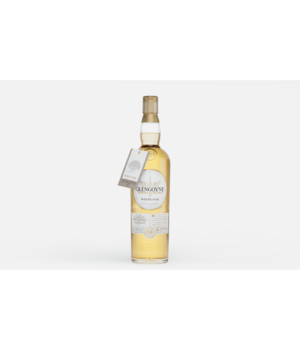
For this selection, we have chosen the Glengoyne White Oak. North America, the summer home of the geese that grace our valley every winter, inspired the maturation of this whisky in White Oak Bourbon and Virgin Oak casks.
This no-age-statement single malt whisky has an approachable flavour profile, characterised mainly by fruitier notes. Those who take their time will detect lively oak, vanilla cream, bright citrus, cake, crisp red apple, ginger spice, unripe banana and a hint of violet on the nose. This fruitiness carries through on the palate, as the flavour of this whisky is soft and playful, with hints of crème brûlée, wine gums, candied lemon, jam tarts and tinned pineapple. Once the flavour has faded, notes of toasted oak infused with caramel linger on the palate.
3. Scottish Island whisky: Isle of Arran
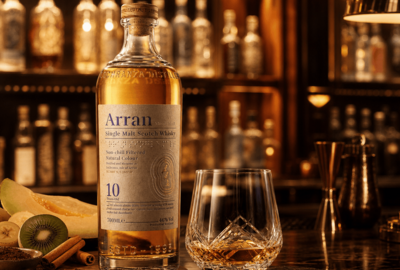
As the third and final Scottish region, we’ve chosen the Isle of Arran. Arran has been one of our most popular whisky brands for years, and both the permanently available expressions, such as the 10-year-old, and the limited releases, such as the Amarone Finish, which are only available periodically, go down well year after year with beginners and seasoned whisky enthusiasts alike.
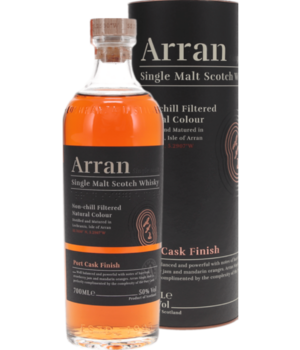
For this selection, we chose the Arran Port Finish, a classic Arran single malt with an additional finish in selected port casks. These casks were closely monitored during the second maturation period by Master Distiller James MacTaggart, to achieve the perfect balance between the port finish and the intrinsic sweetness of Arran malt. The end result is a single malt full of charm, complexity and quality.
On the nose, the connoisseur will detect vanilla, spices and ripe citrus fruits, which give way to the aroma of dried fruit and nuts. On the palate, a combination of fruit and spices can be discovered. There are hints of apple pie with cinnamon and raisin cake, followed by the heart-warming flavour of barley and a touch of sweet pears. The finish reveals a classic, full-bodied single malt that caresses the palate. Arran’s signature flavour – sweet barley – eventually breaks through the earlier complex flavours.
4. Irish whisky
Ireland does not have the extreme regional variations that we see in Scotland. Irish whiskey is known for its smooth and approachable character, with elegant fruity notes, subtle spiciness and a particularly smooth finish. Along with the United States, it is also the only country in the world that uses the alternative spelling ‘whiskey’.
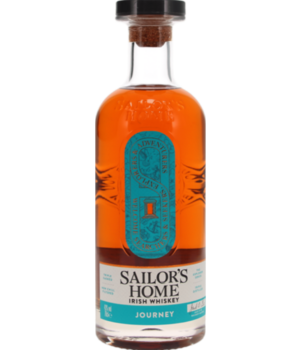
In this overview, we have chosen the Sailor’s Home Journey. This blended whisky is the entry-level expression in the range. Together with Stormchaser, they form Sailor’s Home’s Explorer Series range. Triple-distilled, this Irish whiskey is first matured in virgin American oak, then transferred to American bourbon casks. This is combined with Irish malt whiskey matured in American bourbon and finished in Jamaican rum casks, adding notes of tropical fruit and rum.
On the nose, one detects butterscotch, toasted oak and dark rum. These aromas are echoed on the palate, where you’ll find sticky toffee and molasses, perfectly balanced with the depth of the malt. On the finish, this whisky reveals notes of ripe banana, molasses and vanilla.
With a score of 82/100 on Whisky Voor Iedereen, this blend makes for an excellent starter whisky.
5. Japanese whisky
These days, it’s impossible to imagine the whisky scene without Japan. Most Japanese whisky owes its origins to Masataka Taketsuru. He was born into a family of sake producers and was destined to make his mark in that world. In 1918, as a young student, he travelled to Glasgow, where he first studied at the University of Glasgow and then undertook various work placements at Scottish distilleries. He worked at distilleries including Longmorn, Bo’ness and Hazelburn, where he learnt the tricks of the trade of malt distilling. Meanwhile, he also met Rita Cowan, whom he would marry in 1920. Upon his return to Japan, he first went to work for Kotobukiya Ltd (which would later become Suntory) and helped establish the Yamazaki distillery there. In 1934, he left the company to start his own distillery.
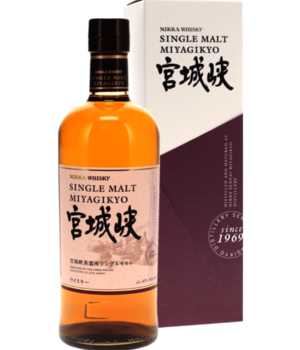
The Miyagikyo distillery is where mainly unpeated single malt whisky is produced. You’ll also find the Coffey stills there, which are used to distil grain spirit – not only for house blends such as Nikka From The Barrel and Days, but also for interesting products such as Coffey Malt, Coffey Gin and Coffey Vodka.
For this selection, we have chosen the Miyagikyo Single Malt whisky. This Miyagikyo single malt was launched in 2016 as a replacement for the then-standard age-stated expression. It immediately won over the hearts of tasters everywhere with its elegant and no-nonsense style. The nose sets the tone straight away: full of aroma and rich. Iris flower, malted barley, exotic fruit, liquorice and camphor. Then gently charred wood and ash, along with further aromatic elements. White flowers and beeswax make a cameo appearance. The palate is robust and lively. The base is malted barley, which provides a splendid canvas for spices, liquorice, ginger, cinnamon and chocolate. The elegance comes to the fore in the middle of the tasting experience, with fresh tobacco leaves and coconut. The finish is long and smooth, as if a rose were slowly ageing. Delicate tannins balance out the sharper edges of its character (zest), and the aftertaste then fades very slowly with hints of roasted nuts, stewed fruit and a subtle tropical fruit (lychee?) as the final note.
6. Colombian rum
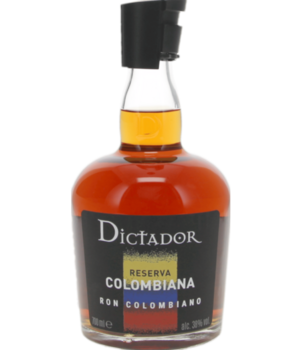
This selection features not only whisky, but also rum. This time, we didn’t opt for a Planteray rum, even though it has been our most popular rum brand for years. Precisely because of its popularity, we suspect that everyone already has a bottle of Planteray rum in their cupboard or has at least tasted it. We therefore hope to surprise you with this Dictador Colombiana.
Dictador Reserva Colombiana is an exceptional aged rum, created under the supervision of Hernan Parra, Dictador’s master distiller. This unique Colombian rum is the result of three generations of the Parra family’s expertise. With its refined aromatic profile, it reflects the essence of Colombian culture through flavours of coffee, chocolate, vanilla, panela and caramel. The rum can be enjoyed neat or used in sophisticated cocktails, offering an unforgettable taste experience.
On the nose, one discovers a complex bouquet of freshly ground coffee, dark chocolate, creamy vanilla and caramel, with soft hints of panela (unrefined cane sugar), creating a warm and indulgent first impression. The flavour is smooth and silky, with a perfect harmony between the richness of the chocolate and the sweetness of the caramel, balanced by subtle hints of roasted coffee. The texture is smooth and velvety, offering a pleasant mouthfeel. The finish is long and lingering, with slightly bitter coffee notes and a return of sweet caramel. Warmth and sweetness combine to create a comforting sensation that lasts a long time.
7. French cognac
We’ll round off with a cognac. Cognac has long been a symbol of luxury, pleasure and refinement. It’s therefore no surprise that it’s a popular gift for dads.
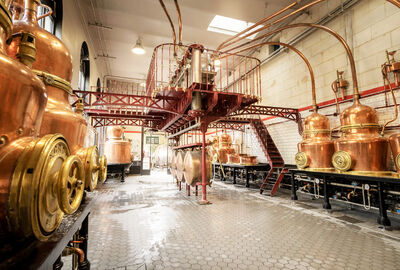
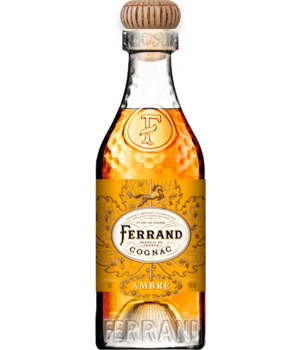
For this selection, we’ve chosen the Pierre Ferrand Ambre. It is a Grande Champagne Cognac made from Ugni Blanc and bottled at 42.3%. To produce this cognac, a double distillation took place over an open fire in small 25-hectolitre copper stills. Maturation took place in 20 per cent new French oak casks for the first few years and 80 per cent casks that had previously contained cognac.
This results in a lovely flavour profile. On the nose, one detects distinct notes of apple and caramelised sugar. A toasty note is rounded off by aromas of bitter almond liqueur. It then opens up to reveal fragrant floral notes. The palate is expressive, with a slightly medicinal quality reminiscent of cough syrup. Plenty of almonds and fruit. The rustic character asserts itself before giving way to pears and green apples. Spicy notes, pepper. The finish is long and lingering, featuring white-fleshed fruit.

Marketing • IT • Klantenservice
I've known Broekmans since I graduated in 2006 and thanks to Jan I've come to know the passion for spirits. I dedicate myself every day to the webshop, customer service and all the IT involved. In my spare time, besides whiskey, I can also really enjoy rum, but just as much as a gin tonic or a simple bellini. In the words of Martien Meiland, if there's no alcohol in it, don't call me!